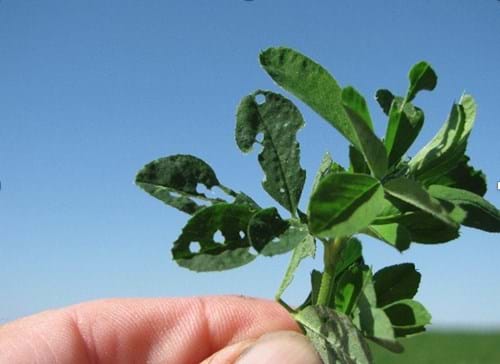
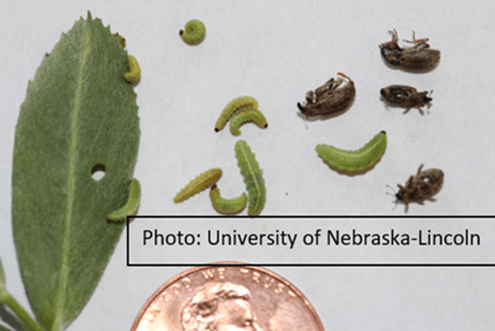
While we have not identified any weevil damage yet, the environment is right for adult weevils to begin depositing eggs in alfalfa stems. As the eggs hatch and the larvae emerge, they begin feeding on alfalfa leaves and large enough populations can be devastating to an alfalfa crop. When road scouting for weevil, a gray tint to the upper canopy will be noticeable due to the feeding the upper new leaves which are the most desirable to the larva. Listed below are some comprehensive tips and decision tools for managing alfalfa weevil.
- Timing: Watch for feeding from ~300 GDUs, through second crop. Rarely do issues show up in third or fourth crop.
- Identification: The pale-green larvae have black heads and tend to feed on the young growth at the top of the plants. Adults, found after 800 GDUs, are gray beetles with small snouts.
- Response: Sweep nets are good for pest survey, but feeding observations are key. If 40% of plants show signs of feeding and harvest is more than 10 days out, consider spraying an insecticide to manage the weevils. When spraying an insecticide be mindful of that products pre harvest interval days (PHI) utilizing a product with a PHI of 10 or less. If the normal cutting schedule puts harvest at less than 10 days, go cut immediately. Early harvest will save an insecticide application.
- Follow-up: Watch 2nd crop regrowth carefully for continued feeding. If weevils are present and regrowth does not start 3-4 days after cutting, spray with an insecticide immediately.