Late Season Soybean Disease Identification
Something went wrong. Please try again later...
By Dairyland Seed Agronomy Team
By Dairyland Seed Agronomy Team
As soybeans enter the full pod (R4) beginning seed (R5) and possibly later, there are several late season diseases that may start appearing. The big three are Sudden Death Syndrome (SDS), Brown Stem Rot (BSR), and Sclerotinia White Mold (SWM). Red Crown Rot is an additional disease to keep an eye out for this year.
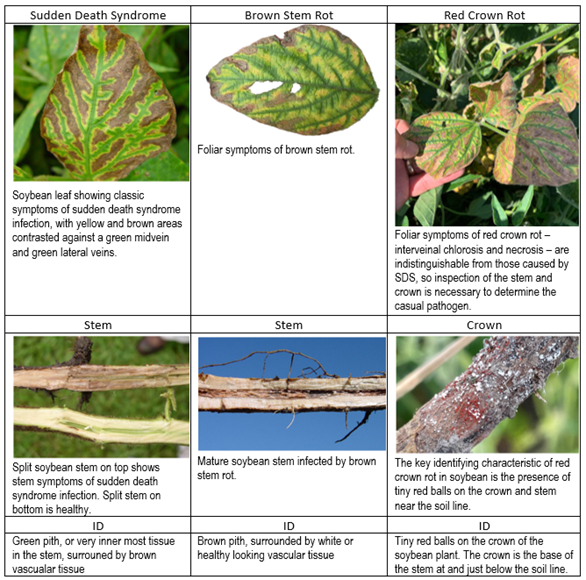
The three foliar look-alike diseases are sudden death syndrome, brown stem rot, and red crown rot. Separation and correct ID of these diseases come from split stem and crown evaluation.
* Red crown rot is spreading from the southeastern United States, and has been identified in Kentucky and southern Indiana, so any ID would likely be in Indiana. However, it is good for all to note red crown rot ID because it has spread rapidly over the last few years.
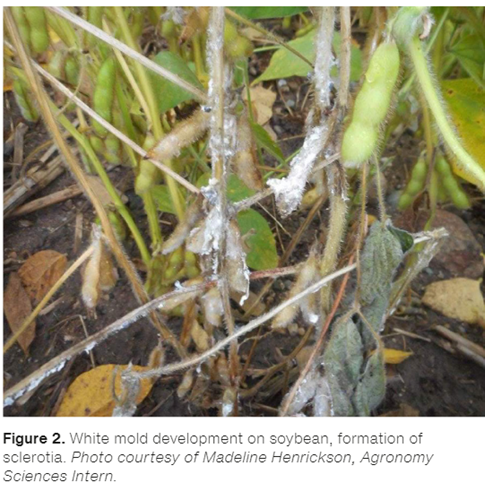
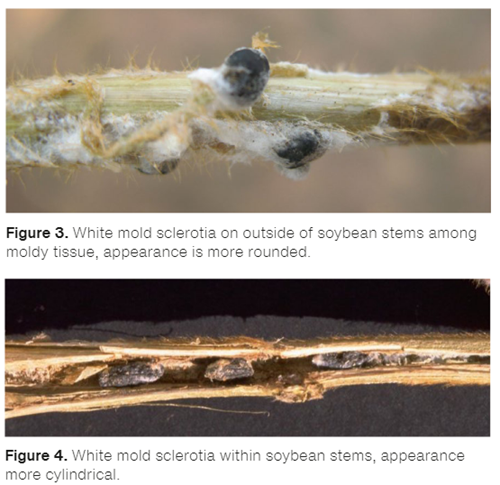
High organic matter or muck soils and areas with a history of SWM infection are locations to scout. SWM is most noticeable from the road as soybeans enter into maturity (R7). Infected plants will have brown or graying leaves in the upper canopy that will stick out from unaffected plants. As development of the soybeans progresses and leaves begin to drop, the plants impacted by SWM will retain their leaves and petioles which is the structure that attached leaves to the stem. The following are the ID characteristics for SWM.
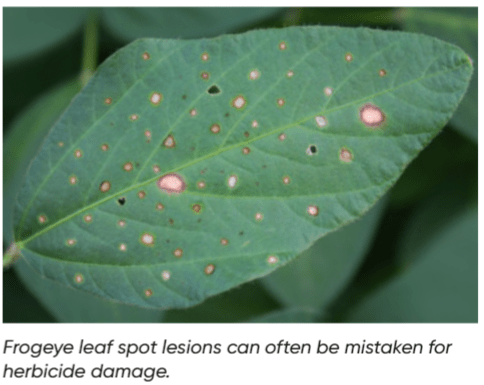
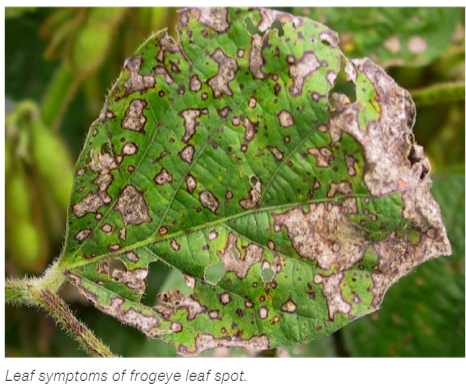
Frogeye leaf spot is a soybean disease that is common in the southern corn belt and can move into the central corn belt on storm fronts from the south. Frogeye infection first appears on leaves in small circular lesions, the lesions will have a dark center which is surrounded by reddish brown margins with a yellow halo. As the disease progresses, the lesions will coalesce or join to form larger lesions. Late-stage infection will also spread to pods which can leach to the seed and cause splotches on the soybean seed. Infection is favored by warm humid conditions, and dry weather will limit disease development.
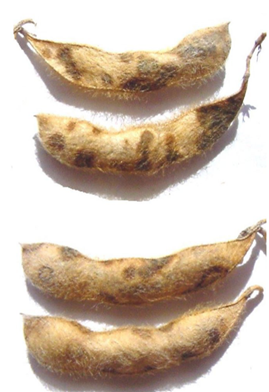
Frogeye leaf spot on soybean pods