Silk Clipping
Something went wrong. Please try again later...
As we roll into pollination season, one of the scouting items we focus on is silk clipping. Silk clipping during the pollination phase can have a direct effect on yield as each unpollinated kernel is a lost kernel.
A couple of crawly critters come to mind when we think of silk clipping. The two most frequent offenders are Japanese beetles and corn rootworm beetles. Silks are an ideal lunch for these pests as they are young succulent plant tissue.
In Figure 1, little economic damage is occurring. Notice that we have both insects in Figure 1. The insects’ heads are deep in the brown silk ball, feeding on more green silk material underneath.
Keep in mind as we talk about thresholds of each species, it doesn’t take into account the additive effect of multiple species silk clipping.
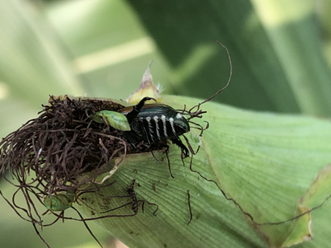
Figure 1: Notice we have both insects feeding in this photo.
Figure 2 shows fresh feeding on silks and it could affect pollen transfer if pollination has not occurred. Typically for silk feeding to be of significance, it will need to be within a half inch of the husk and four to five corn rootworm beetles per plant. In the case of Japanese beetles, it would be three beetles per plant.
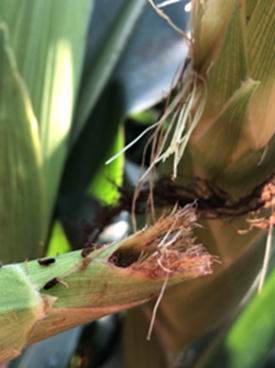
Figure 2: Fresh feeding on silks
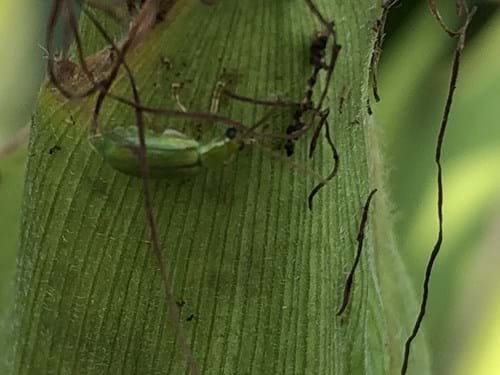
Figure 3: Corn rootworm beetle