Stalk Strength and the Importance of Scheduling Harvest Order
Something went wrong. Please try again later...
By Dairyland Seed Agronomy Team
By Dairyland Seed Agronomy Team
Recent strong wind events are exposing some weakened stalks. It’s not uncommon to see stalk strength start to diminish late season, but this year’s growing conditions likely sped up the process. The frequent rain events this spring forced field work and planting in less-than-ideal conditions. This resulted in several corn fields experiencing compaction, sidewall compaction, or shallow roots. When roots can’t take up enough nutrients coupled with high temperatures that speed up plant development, it’s very common to see stalk cannibalization. The corn plant will steal carbohydrates from the stalk and use that to fill kernels in the ear, leaving the stalk tissue depleted.
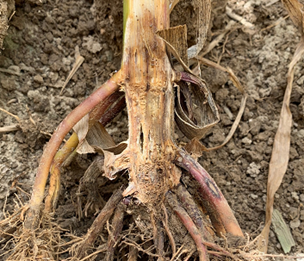
Stalks that have been cannibalized decline and lose their ability to fight off pathogens. Soil borne pathogens can then invade and colonize the plant much easier, resulting in crown and/or stalk rots. Plants infected with crown or stalk rots are at risk for lodging. Usually, we see more wind events in October and November which can also impact standability.
The disease that I believe is very prevalent this year is fusarium. The photo above shows a corn plant with fusarium that has both crown and stalk rot.
The procedure that I follow to check fields is to review which fields were planted in “less than ideal conditions” as well shorter day hybrids and scout them first. I will then walk across a portion of the field and perform Pinch, Push, Shove and Slash tests along the way.
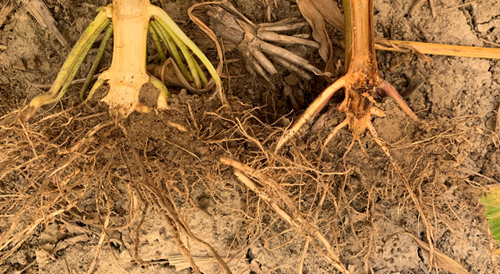
The more plants that fail these tests increases the odds that you will need to harvest that field early or move it up in the harvest schedule. Remember that these affected plants will be more susceptible to wind damage the longer the harvest window gets.
Having and following a harvest order decreases the likelihood of harvesting down corn, and increases the likelihood of capturing more yield but also having a safer and less stressful harvest season.